
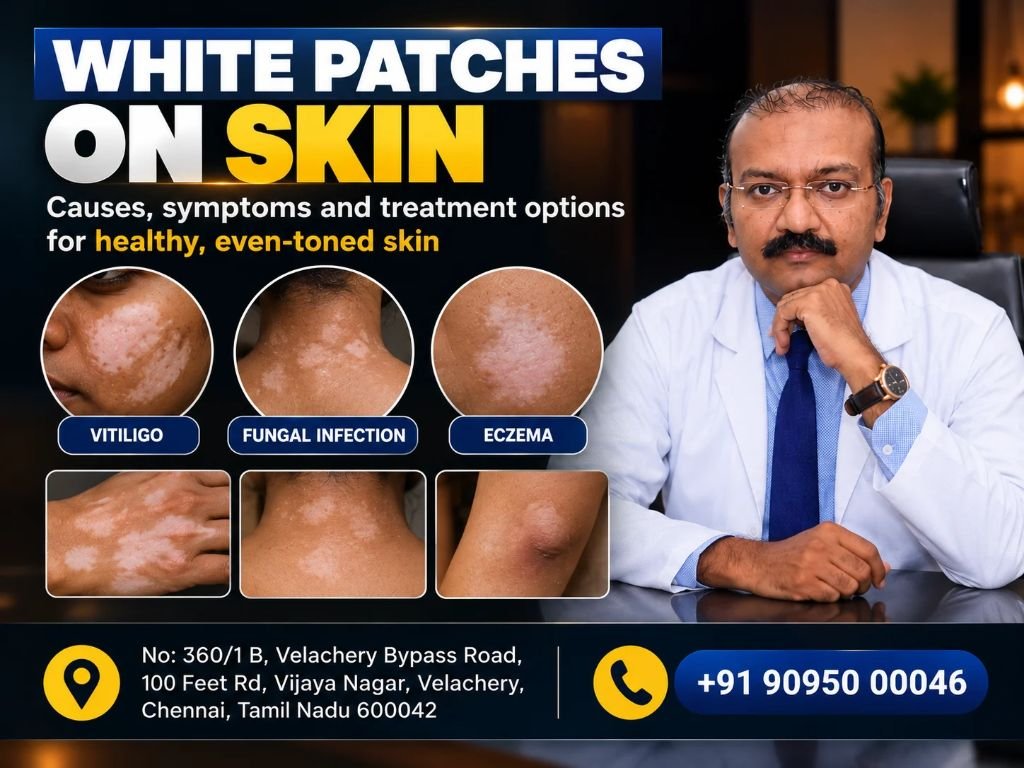
White Patches on Skin: Causes, Symptoms and Treatment Options
White Patches on Skin can appear suddenly or develop gradually, causing concern about changes in natural skin colour. These patches may appear on the face, hands, arms, neck or other parts of the body. Although many people immediately associate white patches with vitiligo, several other skin conditions can cause similar changes. Fungal infections, eczema-related pigmentation changes and certain inflammatory conditions may also produce lighter areas. At Adityan Hair and Skin Care Clinic in Velachery, Chennai, understanding the underlying cause is an important step towards choosing appropriate treatment.
Some areas of reduced pigmentation are temporary and improve after the original skin condition settles. Others may persist or gradually spread. Their appearance, location, texture and progression can provide important clues about the underlying cause.
What Causes White Patches on Skin?
Areas of lighter pigmentation develop when the skin contains less melanin, the pigment responsible for natural skin colour, or when inflammation and other changes make an area appear lighter.
The exact cause depends on the condition affecting the skin. Some changes occur because pigment-producing cells stop functioning, while others appear after inflammation or a superficial fungal infection.
Not every light-coloured area represents permanent pigment loss. Identifying whether it is completely white, mildly lighter, dry or scaly helps narrow down the possible diagnosis.
Quick answer: Common causes of lighter skin areas include vitiligo, pityriasis versicolor, pityriasis alba and post-inflammatory hypopigmentation. These conditions can look similar but differ in their causes, associated symptoms and treatment requirements.
White Patches on Skin: Five Common Causes
1. Vitiligo: Loss of Natural Skin Pigment
Vitiligo is a condition in which the immune system attacks melanocytes, the cells responsible for producing melanin. This can result in clearly defined white areas that may develop on different parts of the body.
Vitiligo commonly affects the face, hands, fingers, elbows and areas around the eyes or mouth. The affected skin is usually smooth and does not produce significant scaling.
Some individuals experience stable pigmentation changes, while others notice gradual changes in size or distribution.
Vitiligo is not contagious and cannot spread through touching, sharing clothes or ordinary physical contact.
Treatment may involve prescribed topical medicines, phototherapy or other dermatologist-selected approaches, depending on the location and extent of pigmentation loss.
2. Fungal Infection and Light-Coloured Areas
Pityriasis versicolor, also called tinea versicolor, is a superficial fungal condition associated with an overgrowth of Malassezia yeast, which normally lives on human skin.
It may cause lighter, darker or pinkish areas, commonly affecting the chest, back, shoulders and neck.
Unlike vitiligo, these areas may have fine scaling, particularly when the affected skin is gently examined.
Warm temperatures, humidity and sweating can encourage the condition. This makes it relevant in Chennai's tropical climate.
Antifungal treatment can control the yeast overgrowth, although normal skin colour may take several weeks or months to return.
3. Pityriasis Alba and Dry Skin
Pityriasis alba commonly affects children and young adults, particularly those with dry skin or a tendency towards eczema.
It often appears as mildly lighter areas on the cheeks, arms or upper body. The skin may initially show slight dryness or fine scaling.
These areas are usually not completely white. They may become more noticeable after sun exposure because the surrounding skin becomes darker.
Gentle moisturising, appropriate sun protection and management of associated inflammation can support recovery.
Pigmentation often returns gradually, although improvement may take time.
4. Post-Inflammatory Hypopigmentation
Some individuals notice pale areas after recovering from eczema, dermatitis, minor injuries or other inflammatory skin conditions.
This is known as post-inflammatory hypopigmentation.
The affected skin produces or displays less pigment temporarily after inflammation. The changes generally correspond to areas where the original rash or irritation occurred.
Many cases improve gradually as the skin recovers, but the time required varies.
Persistent or unusual pigmentation changes may need further examination to exclude other conditions.
5. Other Possible Causes
Certain birthmarks, chemical exposures and less common skin disorders can also cause lighter skin areas.
Some people develop small, pale spots on sun-exposed areas with age, known as idiopathic guttate hypomelanosis.
Rare conditions may produce pigmentation changes alongside altered skin sensation or other symptoms.
Because several conditions can look similar, appearance alone is not always sufficient to establish the diagnosis.
Comparison of Common Causes of White Skin Patches
| Skin Condition | Appearance | Common Areas | Typical Features |
|---|---|---|---|
| Vitiligo | Clearly defined, often completely white areas | Face, hands, fingers, body | Usually smooth, without scaling |
| Pityriasis versicolor | Light or dark patches | Chest, back, shoulders, neck | Fine scaling may be present |
| Pityriasis alba | Mildly lighter, sometimes dry areas | Face, arms | Common in children and people with dry skin |
| Post-inflammatory hypopigmentation | Pale areas following inflammation | Previously affected skin | Often develops after eczema or injury |
| Idiopathic guttate hypomelanosis | Small, round white spots | Arms, legs | More common with age and sun exposure |
This comparison shows why lighter skin areas should not automatically be identified as vitiligo. The presence of scaling, previous inflammation and the distribution of pigmentation changes can help distinguish different conditions.
Are White Patches Always Vitiligo?
No. Vitiligo is only one possible explanation for reduced skin pigmentation.
Fungal infections, pityriasis alba and post-inflammatory pigmentation changes can produce similar appearances.
Vitiligo often causes more clearly defined areas of pigment loss, while some other conditions produce less distinct changes with mild dryness or scaling.
However, these differences are not reliable enough for self-diagnosis.
A dermatologist may use clinical examination and additional tests when the appearance is uncertain.
How Are White Patches Diagnosed?
Diagnosis begins with examining the affected areas, their distribution and any associated symptoms.
A dermatologist may ask when the changes first appeared, whether they have spread and whether itching, dryness or previous inflammation occurred.
A Wood's lamp examination can help highlight certain pigmentation changes. It may be useful when assessing suspected vitiligo.
If a fungal infection is suspected, a skin scraping examined under a microscope may help confirm the diagnosis.
Additional investigations are considered only when the clinical findings suggest they are necessary.
Can White Patches Spread to Other Body Areas?
Whether lighter areas spread depends on their underlying cause.
Vitiligo can remain stable or progress over time. Its course is unpredictable and differs between individuals.
Pityriasis versicolor may affect additional areas or recur, especially in warm and humid conditions.
Pityriasis alba and post-inflammatory hypopigmentation often improve gradually once the associated skin problem settles.
New or expanding areas deserve assessment, particularly when the diagnosis remains uncertain.
Diagnosis, Treatment and Daily Skin Care
Treatment Options for White Skin Patches
Treatment focuses on the underlying condition rather than simply changing the appearance of the affected area.
Vitiligo may be managed using prescribed topical anti-inflammatory medicines, selected immune-modulating treatments or phototherapy. Treatment choice depends on factors such as age, location, disease activity and extent.
Fungal conditions generally require appropriate antifungal medicines. Pigmentation may remain uneven temporarily even after the infection has been treated.
Pityriasis alba usually benefits from gentle skincare, moisturisers and treatment of associated eczema when required.
Post-inflammatory hypopigmentation may improve as inflammation resolves, although recovery can be gradual.
Not every condition needs the same medicine, and inappropriate use of steroid creams or home remedies can create additional skin problems.
Daily Skin Care for People With White Patches
Gentle skincare can help protect sensitive areas and reduce irritation.
A mild cleanser and suitable moisturiser may be helpful, especially when dryness or eczema is present.
Sun protection is important because depigmented skin has less natural protection against ultraviolet radiation. Sunscreen and protective clothing can also reduce the contrast between affected and unaffected skin.
Avoiding harsh scrubs, unnecessary bleaching products and unprescribed medicated creams may help prevent irritation.
These measures support skin health but do not replace treatment for the underlying condition.
White Patch Assessment at Adityan Hair and Skin Care Clinic, Velachery
At Adityan Hair and Skin Care Clinic in Velachery, Chennai, patients with unexplained white or lighter skin areas can undergo dermatological assessment.
The evaluation considers the appearance, distribution, duration and progression of pigmentation changes.
Identifying whether the condition is related to vitiligo, a fungal infection, eczema or another cause helps guide suitable management.
Early assessment may be particularly useful when pigmentation changes are spreading, changing or appearing in multiple areas.
Learn more about the clinic at Adityan Hair and Skin Care Clinic. For general information about skin-related medical care, visit this dermatology reference.
Frequently Asked Questions
1. Are white patches on skin dangerous?
Most common causes of white patches are not dangerous. However, the underlying condition should be identified because treatment and expected recovery vary. Patches associated with numbness, persistent inflammation or unusual changes may require more detailed examination.
2. Can white patches disappear naturally?
Some white patches, particularly those associated with pityriasis alba or previous inflammation, may gradually regain pigmentation. Vitiligo and other causes may follow a different course. Recovery depends on the diagnosis and individual skin response.
3. Is vitiligo contagious?
No. Vitiligo is not an infectious disease and cannot spread through touching, sharing food, clothing or close contact. It is associated with changes in the immune system that affect pigment-producing cells.
4. Can fungal infections cause white patches?
Yes. Pityriasis versicolor can cause lighter patches, often on the chest, back and shoulders. These patches may have fine scaling. Antifungal treatment can control the condition, but normal pigmentation may take additional time to return.
5. Why do children develop white patches on their faces?
Pityriasis alba is a common cause of lighter facial patches in children, especially those with dry skin or eczema. Other conditions, including vitiligo, are also possible. The appearance and associated symptoms help guide diagnosis.
6. Can white patches be treated permanently?
Treatment outcomes depend on the cause. Some conditions resolve completely, while others may recur or require ongoing management. Vitiligo treatment may produce repigmentation, but results vary and permanent resolution cannot be guaranteed.
Visit Adityan Hair and Skin Care Clinic – Velachery, Chennai
White or lighter skin areas may result from several different skin conditions, and identifying the cause is essential for choosing appropriate care.
Adityan Hair and Skin Care Clinic provides dermatological assessment for pigmentation changes and other skin concerns in Velachery, Chennai.
Adityan Hair and Skin Care Clinic
No: 360/1 B, Velachery Bypass Road,
100 Feet Road, Vijaya Nagar,
Velachery, Chennai,
Tamil Nadu – 600042
Phone: +91 90950 00046
Visit Velachery Clinic WebsiteFinal Thoughts
White patches on skin do not always indicate vitiligo. Fungal infections, pityriasis alba, post-inflammatory changes and other conditions can also cause lighter areas.
The pattern, texture and progression of the affected areas provide useful diagnostic clues. Accurate identification helps determine whether antifungal medicines, moisturising care, phototherapy or another treatment approach may be appropriate.
Understanding the cause is the first step towards managing pigmentation changes safely and effectively.