
Scalp Infection and Hair Fall: What Your Itchy Scalp May Be Telling You
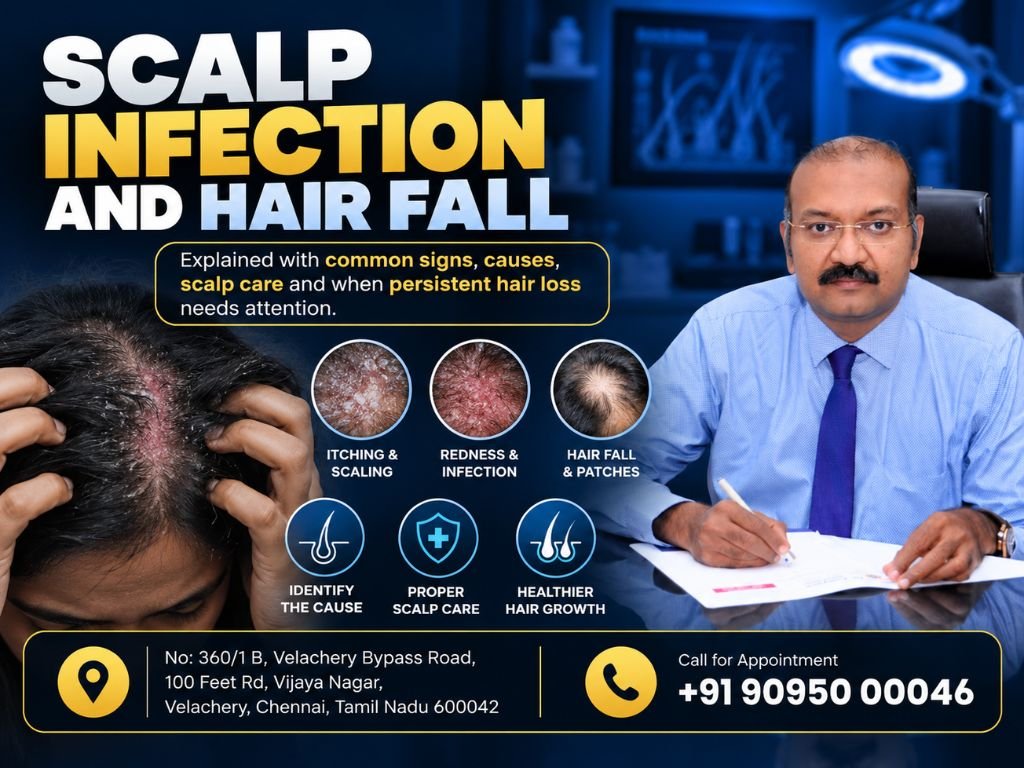
Scalp infection and hair fall can occur together when infection, inflammation, itching or repeated scratching affects the scalp and hair. Some scalp infections may cause temporary shedding or hair breakage, while certain conditions can produce visible patches of hair loss. The appearance of the scalp, type of scaling, redness, soreness and pattern of hair loss can provide useful clues. At Adityan Hair and Skin Care Clinic in Velachery, Chennai, identifying what is happening on the scalp is important because not every itchy or flaky scalp is caused by the same condition.
Hair fall with itching can be confusing. Some people assume dandruff is responsible, while others repeatedly change shampoos or apply different oils. Persistent scalp symptoms together with noticeable hair loss may need closer attention because fungal infections, bacterial infections and inflammatory scalp conditions can sometimes look similar during their early stages.
What Is the Scalp Infection and Hair Fall Connection?
The scalp contains thousands of hair follicles along with oil glands and microorganisms that normally live on the skin. Problems can develop when certain fungi or bacteria cause infection or when inflammation affects the scalp. Hair loss does not happen in exactly the same way with every scalp condition.
In some cases, inflammation and scratching can increase temporary shedding or cause hair shafts to break. In other cases, an infection may involve the hair and follicles more directly. This is why treating every scalp problem with the same anti-dandruff shampoo, hair oil or home remedy may not address the actual cause.
Common Signs of Scalp Infection and Hair Fall
Scalp infections can appear differently depending on their cause. Itching is common, but it is not the only symptom worth noticing. The scalp may develop scaling, redness or changes in colour, tenderness, crusting or sore areas. Some people may notice small bumps or pus-filled spots around the hair follicles.
Hair may also break easily in affected areas, producing uneven patches where short hairs remain. Round or irregular areas of hair loss accompanied by scaling deserve attention because they may not be ordinary dandruff. A scalp problem that becomes more painful, spreads or produces increasing hair loss should not simply be treated as mild itching.
Fungal Scalp Infection and Hair Loss
Tinea capitis, commonly called scalp ringworm, is a fungal infection involving the scalp and hair. Despite its name, it is not caused by a worm. It can produce itchy, scaly areas and patches where hair becomes fragile and breaks. Some affected areas may contain short broken hairs rather than appearing completely smooth.
More inflammatory forms can cause swelling, crusting and tender areas. Fungal scalp infections can also spread between people, which makes correct identification important. Scalp ringworm should not automatically be confused with ordinary dandruff simply because both conditions may produce visible flakes.
Bacterial Problems Around Hair Follicles
Hair follicles can sometimes become inflamed or infected, producing a condition commonly described as folliculitis. The scalp may develop small inflamed bumps, tenderness, itching or pus-filled spots. Scratching and picking these areas can further irritate the skin.
Hair shedding is not necessarily the main feature of every case, but significant or persistent inflammation around follicles can affect the local scalp environment. Trying to squeeze scalp bumps or repeatedly scratching them may increase irritation and damage the skin.
Scalp Infection and Hair Fall vs Other Scalp Problems
Flaking, itching and hair loss can overlap across several scalp conditions. The following comparison provides a simple overview, but it should not be used to identify a condition based on one symptom alone.
| Feature | Possible Scalp Infection | Dandruff | Other Hair Loss |
|---|---|---|---|
| Itching | Can be significant | Common | May be absent |
| Scaling | May occur in affected areas | Usually widespread flakes | Often absent |
| Redness or inflammation | Can be noticeable | May occur | Depends on the cause |
| Broken hairs | Possible with some fungal infections | Not usually a main feature | Depends on the condition |
| Pus or crusting | Can occur | Uncommon | Usually absent |
| Hair-loss pattern | May be patchy | Usually no defined bald patches | Pattern varies |
Why Scratching Can Make Hair Fall Look Worse
An itchy scalp naturally creates an urge to scratch. Repeated aggressive scratching with fingernails can injure the scalp surface and place mechanical stress on hair shafts. Already fragile hairs may break more easily, making hair loss appear worse.
Scratching can also create tiny breaks in the skin. When infection or significant inflammation is already present, additional damage may make the scalp more uncomfortable. Controlling the reason for itching is therefore more useful than simply trying to tolerate the itch without understanding why it is happening.
Will Hair Grow Back After a Scalp Infection?
Whether hair grows back depends on the type and severity of the scalp problem and whether the follicles remain healthy. When hair loss mainly results from temporary inflammation or hair breakage, growth may gradually recover after the underlying condition settles. Hair grows slowly, so visible improvement may take time.
More severe or prolonged inflammation can sometimes damage follicles and cause scarring. Scarring hair loss behaves differently because damaged follicles may not produce normal new hair. Painful inflammation, thick crusting or rapidly increasing patches of hair loss therefore deserve closer attention.
Can Dandruff Be Mistaken for an Infection?
Yes. Flaking does not automatically mean dandruff. Dandruff commonly produces scalp flakes and itching, but fungal infections and inflammatory conditions can also cause scaling. Looking only at the flakes can therefore be misleading.
A person who repeatedly uses dandruff products without improvement may have another scalp concern. The pattern of scaling, associated symptoms and changes in the hair should be considered together. More information about skin and scalp health is available through the field of dermatology.
Why Heavy Hair Oiling May Not Solve the Problem
Hair oil can make dry hair shafts feel smoother, but it is not a universal treatment for scalp infections. Applying more oil simply because the scalp is flaky may not address fungal, bacterial or inflammatory causes. The scalp and hair shaft can have different needs, so a product that makes hair feel soft does not necessarily treat the skin underneath.
Chennai Weather and Scalp Health
Chennai's warm and humid conditions can make sweating and scalp oil more noticeable. People who commute regularly, exercise outdoors or wear helmets for long periods may experience additional sweat and product buildup. Sweating itself does not automatically cause an infection, but an already irritated scalp may feel more uncomfortable when it remains damp.
Regular cleansing with a suitable shampoo can help remove excess oil, sweat and buildup. Aggressive washing, scratching and very hot water should be avoided when the scalp is already sensitive.
Can Scalp Infections Spread?
Some infections can spread through close contact or contaminated personal items. Fungal scalp infections, for example, may spread through shared combs, brushes, towels, pillows, hats or other objects that touch affected hair and scalp. Avoiding shared personal hair-care items is a sensible precaution when an infectious condition is suspected.
When Hair Fall May Have Another Cause
Having a scalp infection does not mean every falling hair is caused by the infection. Genetic pattern hair loss, stress-related shedding, nutritional problems, hormonal changes and other conditions can occur at the same time.
If scalp symptoms improve but shedding continues, the hair-loss pattern should be considered separately. A widening central part, gradual crown thinning, receding hairline or smooth bald patches may point toward another explanation. You can learn more about hair and scalp services at Adityan Hair and Skin Care Clinic Velachery.
When Scalp Infection With Hair Fall Needs More Attention
Persistent scalp pain, swelling, pus, thick crusting, spreading patches, broken hairs or rapidly increasing hair loss deserve closer attention. Severe itching that repeatedly returns may also suggest that the problem is more than ordinary dandruff.
Identifying the actual scalp condition early helps avoid repeatedly experimenting with shampoos, oils and home remedies that may not match the cause.
Scalp and Hair Fall Care at Adityan Velachery
At Adityan Hair and Skin Care Clinic in Velachery, Chennai, scalp concerns can be assessed according to the appearance of the scalp, type of scaling, presence of inflammation, duration of symptoms and pattern of hair loss. Hair density and the condition of hairs within affected areas may also provide useful information.
The aim is to understand whether the concern involves infection, dandruff, another inflammatory scalp condition or a separate form of hair loss. This distinction helps create a more focused approach rather than treating every itchy scalp or episode of shedding in exactly the same way.
Frequently Asked Questions
1. Can a scalp infection cause hair fall?
Yes. Certain scalp infections can contribute to shedding or breakage through inflammation, itching or direct involvement of the hair and follicles. The effect depends on the type and severity of the condition.
2. Will hair grow back after a scalp infection?
Hair may gradually grow back when the follicles remain healthy and the underlying scalp problem is controlled. Recovery takes time because new hair grows slowly. Severe inflammation that causes follicle scarring can behave differently.
3. How do I know if scalp flakes are dandruff or an infection?
Dandruff commonly causes flakes and itching, while some infections may also produce patchy hair loss, broken hairs, crusting, tenderness or significant inflammation. Because these signs can overlap, persistent or unusual symptoms need closer assessment.
4. Can fungal scalp infection cause bald patches?
Yes. Tinea capitis can produce areas of hair loss where hairs become fragile and break. Scaling and itching may occur within affected areas, and some cases can become significantly inflamed.
5. Can I apply hair oil when my scalp is infected?
Hair oil does not treat every cause of scalp infection. Heavy oiling may not help when the scalp is inflamed, greasy, crusted or affected by an infectious condition. Scalp care should be based on the underlying cause.
6. When should scalp itching with hair fall get more attention?
Persistent itching with painful areas, pus, crusting, spreading patches, broken hairs or rapidly increasing hair loss deserves closer attention. Continuing hair fall even after scalp symptoms improve may also indicate a separate hair-loss condition.
Visit Adityan Hair and Skin Care Clinic – Velachery
For persistent scalp itching, scaling, suspected scalp infection, patchy hair loss or excessive shedding, visit our Velachery clinic.
Adityan Hair and Skin Care Clinic
No: 360/1 B, Velachery Bypass Road,
100 Feet Road, Vijaya Nagar,
Velachery, Chennai, Tamil Nadu 600042
Phone: +91 90950 00046
A Healthier Scalp Starts With Identifying the Cause
Understanding the connection between scalp infection and hair fall helps prevent every itchy scalp from being treated as simple dandruff. Infection, inflammation and repeated scratching can affect the scalp and hair in different ways, while a separate hair-loss condition may sometimes be present at the same time. Identifying the pattern early and choosing care that matches the actual cause can support better scalp health and reduce avoidable hair damage.