
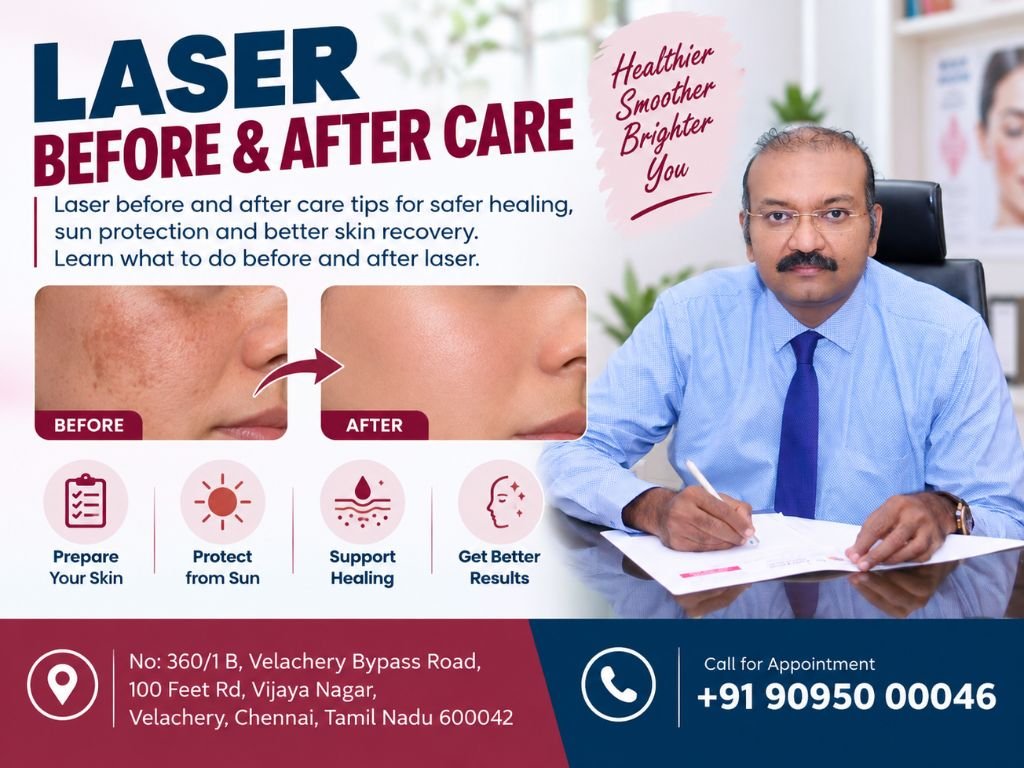
Getting Laser Treatment? Don’t Make These Before & After Care Mistakes
Laser before and after care plays an important role in helping your skin prepare for a laser procedure and recover comfortably afterwards. Whether laser treatment is being considered for unwanted hair, pigmentation, acne scars or another suitable skin concern, following the right instructions can help reduce unnecessary irritation and support the expected treatment process. At Adityan Hair and Skin Care Clinic in Velachery, Chennai, care is planned according to the treatment type, skin condition, skin tone and area being treated.
Laser procedures are not all identical. Different devices can use different wavelengths, energy levels and treatment methods. Therefore, instructions for one procedure may not be exactly the same as another. Your skincare routine should match the treatment you receive instead of copying a routine that worked for somebody else.
Why Laser Before and After Care Matters
Good preparation helps keep the skin in a suitable condition before treatment, while proper aftercare protects skin that may temporarily become more sensitive afterwards. Depending on the procedure, temporary redness, warmth, mild swelling, dryness or sensitivity can occur. Some treatments involve very little recovery time, while others require more careful skincare for several days.
Quick answer: Good laser care means preparing the skin gently, reducing unnecessary sun exposure, following treatment-specific instructions and avoiding irritation while the skin recovers. The exact routine depends on the laser, treatment area and individual skin response.
Following a suitable routine can also reduce avoidable irritation caused by harsh products, scratching, rubbing or excessive sunlight. Laser treatment is part of dermatology, and different skin concerns can require very different treatment settings and recovery instructions.
Laser Before and After Care: What to Do Before Treatment
Before your appointment, keep your skincare routine simple and follow the instructions provided for your particular procedure. Avoid experimenting with strong new products immediately before treatment because irritated skin may become more sensitive.
Sun protection is especially important. A recent tan or sunburn can affect how some procedures are planned, particularly when treatment targets unwanted hair or pigment. Chennai's strong sunlight means exposure can happen during ordinary activities such as commuting, walking or travelling, even when you are not deliberately spending time outdoors.
Tell the Clinic About Your Skincare and Medicines
Share information about skincare products and medicines you currently use. Some active ingredients or medicines can influence skin sensitivity. Knowing what you use helps the treatment team decide whether any part of your normal routine needs to be adjusted.
For laser hair reduction, you may be asked to shave the area before treatment. Waxing, threading and plucking are different because they remove hair from the root, which can interfere with procedures designed to target the hair follicle.
Laser Care at a Glance
| Stage | What to Consider | Why It Matters |
|---|---|---|
| Before treatment | Avoid excessive sunlight and tanning | Helps keep the skin in a suitable condition for treatment |
| Before treatment | Keep skincare gentle | Reduces unnecessary irritation |
| Before treatment | Share medicines and skincare products being used | Helps identify factors that may affect skin sensitivity |
| Treatment day | Keep the area clean as instructed | Helps prepare the treatment area |
| After treatment | Use gentle skincare | Supports temporarily sensitive skin |
| After treatment | Protect exposed skin from sunlight | Helps reduce additional irritation and unwanted darkening |
| Recovery | Avoid rubbing, picking and harsh exfoliation | Allows skin to recover without unnecessary stress |
The table provides general guidance rather than one fixed routine. Preparation and recovery instructions vary according to the procedure, treatment intensity, body area and individual skin response.
Laser Before and After Care: What to Do After Treatment
After some procedures, the skin can feel warm or appear slightly red. Mild sensitivity or temporary swelling may also occur. Treat the area gently and avoid scratching, rubbing or repeatedly touching the treated skin.
If a soothing product has been recommended, use it according to the instructions instead of adding multiple creams or home remedies. Cleansing should also remain gentle. Very hot water, rough towels and aggressive scrubbing can make sensitive skin feel more uncomfortable.
Should You Use Your Normal Skincare Immediately?
Not always. Your everyday routine may include exfoliating acids, retinoids, scrubs or other active ingredients that are suitable on normal days but may be irritating after certain procedures. The timing for restarting them depends on the treatment.
A simple routine based on gentle cleansing, moisturising when appropriate and sun protection is often easier for recovering skin to tolerate. Avoid assuming that adding more products will make the skin recover faster.
Avoid Picking, Scratching and Peeling
After some treatments, temporary dryness, flaking or surface changes can develop. Picking at the area may disturb the recovery process and increase irritation. If flaking or crusting occurs, allow the skin to recover according to the instructions provided instead of trying to remove it manually.
Important for Indian skin tones: unnecessary irritation can sometimes leave noticeable post-inflammatory dark marks. Gentle recovery care therefore matters just as much as the procedure itself.
Exercise, Heat and Sweat After Treatment
Whether you need to avoid exercise depends on the procedure. Intense workouts create heat and sweat, which may make recently treated skin feel more irritated after some treatments. You may therefore be asked to temporarily avoid strenuous exercise, steam rooms, saunas or similar heat-producing activities.
The restriction period is not the same for every procedure. A mild laser hair session and a more intensive facial treatment can have very different recovery requirements.
Why Random Home Remedies Can Be a Mistake
Lemon juice, strong herbal mixtures, scrubs, bleaching products and other DIY remedies should not be used to try to speed up recovery. Recently treated skin may temporarily be more reactive, and irritating ingredients can increase redness or discomfort.
More products do not automatically mean faster healing. During the early recovery period, keeping the routine simple is often the easier approach for sensitive skin.
How Long Does Skin Take to Recover?
Recovery time depends heavily on the procedure. Selected laser hair treatments may produce only short-term redness or sensitivity, while treatments aimed at pigmentation, texture or acne scars can cause more noticeable temporary changes.
Skin type, treatment intensity, treatment area and individual response also affect recovery. This is why comparing your recovery with another person's social-media experience may give you the wrong expectation.
Laser Treatment Care in Chennai Weather
Chennai's hot and humid conditions can make post-treatment care more challenging. Sweat, strong sunlight and outdoor travel may make sensitive skin uncomfortable. When advised, plan your treatment day so unnecessary outdoor exposure is reduced.
If you travel frequently on a two-wheeler, remember that the face, neck, hands and arms can receive substantial sunlight during normal journeys. Sunscreen and suitable physical protection can therefore become an important part of everyday recovery care for exposed areas.
Laser Care at Adityan Hair and Skin Care Clinic Velachery
At Adityan Hair and Skin Care Clinic in Velachery, treatment planning can consider the person's skin type, concern, treatment area and selected procedure. Preparation and recovery instructions should match the specific treatment rather than using one generic routine for everyone.
Following procedure-specific instructions carefully can protect sensitive skin during recovery and make the treatment journey easier to manage.
Frequently Asked Questions
1. Can I use sunscreen after laser treatment?
Sun protection is commonly important after many procedures because treated skin may temporarily become more sensitive to sunlight. The suitable product and when it should be applied depend on the procedure and the instructions provided.
2. Can I wash my face after laser treatment?
This depends on the procedure. When cleansing is allowed, gentle washing is generally preferable to hot water, harsh cleansers or scrubbing. Follow the instructions provided for your particular treatment.
3. Can I apply makeup after facial laser treatment?
The waiting period varies according to treatment type and intensity. Some procedures require only a short break, while others need a longer recovery period before makeup is applied.
4. Should I stop skincare products before treatment?
Some active ingredients may need to be adjusted before selected procedures, but this does not mean every skincare product must automatically be stopped. Your existing routine should be considered when the treatment is planned.
5. Can I go outside after laser treatment?
It depends on the treatment, but unnecessary direct sunlight may need to be limited while treated skin is sensitive. Suitable sunscreen and physical sun protection may be recommended for exposed areas.
6. Why should I avoid scrubbing after treatment?
Scrubbing creates friction and can irritate skin that is already temporarily sensitive. Gentle care allows the treated area to recover without adding unnecessary inflammation.
Visit Adityan Hair and Skin Care Clinic – Velachery
For laser treatment, skin concerns and personalised preparation and recovery guidance, visit:
Adityan Hair and Skin Care Clinic
No: 360/1 B, Velachery Bypass Road,
100 Feet Road, Vijaya Nagar,
Velachery, Chennai, Tamil Nadu 600042
Learn more from the Adityan Hair and Skin Care Clinic Velachery website .
Key Takeaway
Understanding the right care routine can make your treatment journey easier and help protect your skin during recovery. Prepare the skin properly, avoid unnecessary irritation, protect exposed areas from excessive sunlight and follow instructions specific to your procedure. Instead of copying someone else's routine, your care should match your skin, treatment area and type of procedure.