
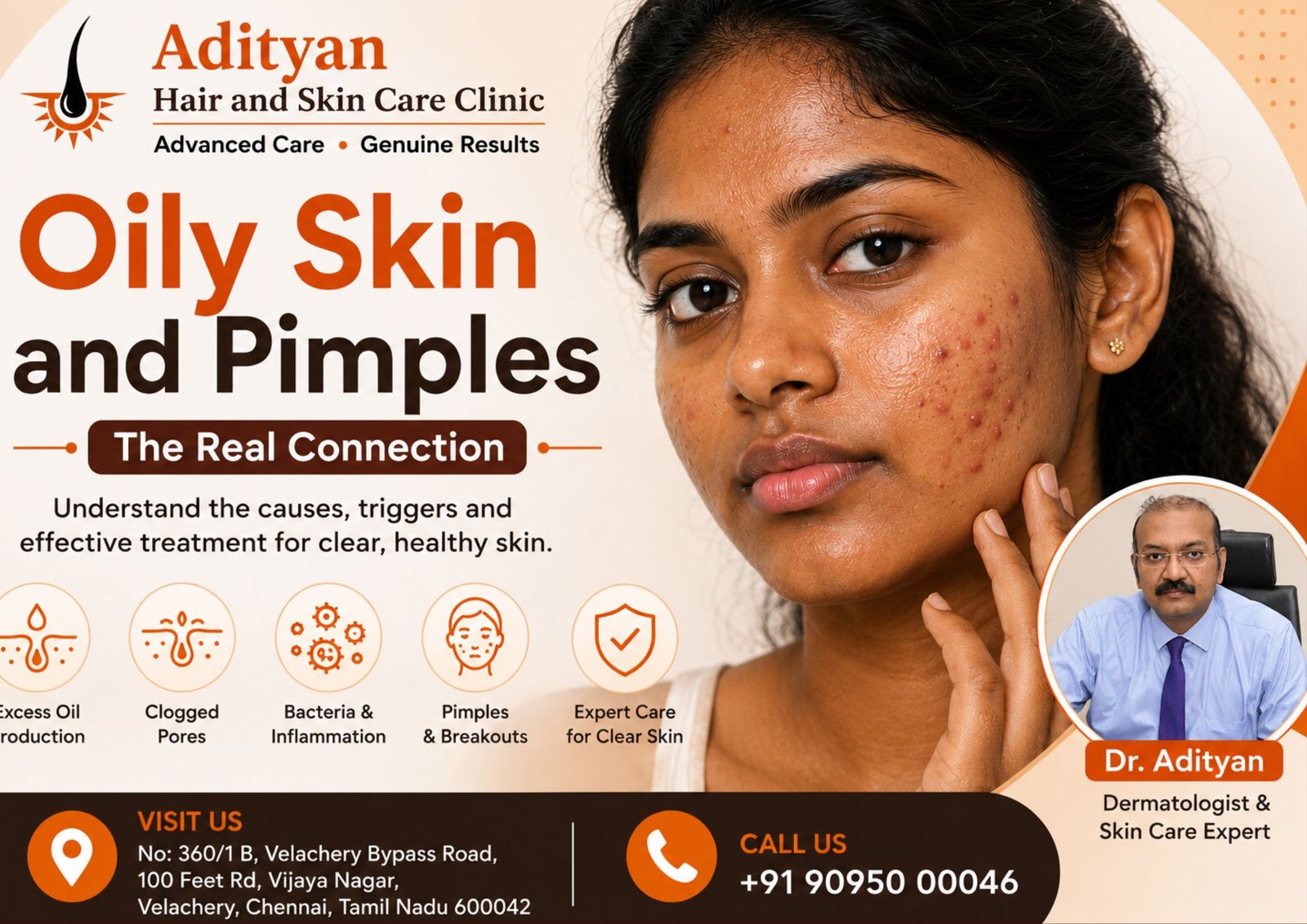
Oily Skin and Pimples: The Hidden Connection You Should Know
The oily skin and pimples connection becomes easier to understand when you know how excess oil, dead skin cells and blocked pores work together. Oily skin is not unhealthy by itself because natural oil protects the skin and reduces moisture loss. Problems may begin when too much oil mixes with dead cells inside the pores, creating blackheads, whiteheads and inflamed pimples. At Adityan Hair and Skin Care Clinic in Velachery, Chennai, acne-prone skin is assessed carefully to understand oil production, pimple type, sensitivity and possible triggers before personalised care is planned.
Having oily skin does not mean that a person will always develop severe acne. Some people have naturally shiny skin with only occasional breakouts, while others experience recurring pimples on the face, chest, shoulders or back. Hormonal activity, genetics, skincare products, inflammation and pore blockage can all influence how acne develops.
Understanding the Oily Skin and Pimples Connection
The skin contains sebaceous glands that produce an oily substance called sebum. Sebum lubricates the skin and prevents it from becoming excessively dry. These glands are connected to hair follicles, commonly called pores.
When excess sebum combines with dead skin cells, the follicle may become blocked. A closed blockage may appear as a whitehead, while an open blockage can become a blackhead. When inflammation and bacteria are involved, the blocked pore may develop into a red, painful or pus-filled pimple.
Simply wiping oil from the face cannot completely prevent acne because the blockage develops inside the follicle. Effective care should reduce excess oil, support normal skin renewal and protect the skin barrier without making the face overly dry.
Why the Oily Skin and Pimples Connection Differs for Each Person
Oil production is influenced by several factors. Hormonal changes during puberty can increase sebum production, which is why pimples are common among teenagers. Adults may also experience oily skin because of hormones, stress, genetics or unsuitable skincare practices.
Chennai’s warm and humid climate can make the face feel shinier. Sweat and oil are different substances, but leaving sweat, oil, sunscreen, makeup and dirt on the skin for long periods may contribute to pore blockage.
Some people have oily skin mainly on the forehead, nose and chin while the cheeks remain normal or dry. This is known as combination skin. Such skin requires balanced care because strong drying products applied across the whole face may irritate the drier areas.
Does Oily Skin Always Cause Pimples?
Oily skin can increase the chance of blocked pores, but excess oil is only one part of acne formation. Dead skin cells, inflammation, bacterial activity, genetics and hormonal influences also matter.
A person may therefore have oily skin without frequent acne or develop pimples even when the surface does not look extremely oily. The goal is not to remove every trace of natural oil. Completely stripping the skin may weaken its barrier and cause dryness, redness or sensitivity.
Why Harsh Cleansing Can Make Oily Skin Feel Worse
Many people wash their face repeatedly because they believe that squeaky-clean skin will prevent acne. Frequent washing with strong soap may remove protective oils and irritate the skin. The face may feel tight immediately after cleansing but become shiny again later.
Gentle cleansing in the morning and before bedtime is usually enough for most people. An additional wash may be useful after heavy sweating. Rough brushes, harsh scrubs and alcohol-heavy products can irritate acne-prone skin instead of clearing it.
Oily Skin and Acne-Prone Skin Compared
| Oily Skin | Acne-Prone Skin |
|---|---|
| Usually appears shiny, especially on the forehead, nose and chin. | Develops blackheads, whiteheads, inflamed pimples or painful bumps. |
| May have visible or enlarged-looking pores. | Pores become blocked by oil and dead skin cells. |
| Can exist without frequent breakouts. | May occur in oily, dry, sensitive or combination skin. |
| Needs gentle cleansing and lightweight hydration. | Needs treatment based on acne type and severity. |
| Natural oil helps protect the skin barrier. | Inflammation may leave dark marks or scars when untreated. |
Skincare and Treatment for Oily Skin and Pimples
A gentle cleanser can remove excess oil, sunscreen, sweat and environmental impurities without damaging the natural barrier. Washing the face in the morning and at night is generally enough. Cleansing after heavy sweating may also help.
A lightweight moisturiser remains important even for oily skin. Products labelled non-comedogenic are designed to be less likely to block pores. Avoiding moisturiser completely may leave the skin dehydrated and uncomfortable.
Sunscreen is important because sunlight can darken post-acne marks. A lightweight sunscreen designed for acne-prone skin can provide protection without creating an unnecessarily heavy feeling.
Pimples should not be squeezed or picked. Pressing inflamed acne can push irritation deeper into the skin and increase the chance of pigmentation or scarring. Makeup brushes, towels and pillow covers should also be cleaned regularly.
Common Mistakes That Can Worsen Breakouts
Using rough scrubs is a common mistake. Pimples are not simply caused by dirt on the surface, so aggressive rubbing cannot remove the blockage inside the follicle. It may instead increase redness and irritation.
Frequently changing skincare products can make it difficult to understand what suits the skin. Acne treatment usually takes time, and improvement is gradual rather than immediate.
Heavy hair oils, oily styling products and thick cosmetics may reach the forehead or hairline and contribute to clogged pores in some people. Product choice should be reviewed when pimples repeatedly appear around these areas.
How Oily Skin and Pimples May Be Treated
Treatment depends on whether the patient has blackheads, whiteheads, inflamed pimples, painful nodules or acne-related pigmentation. Mild acne may respond to suitable topical treatment and consistent skincare, while persistent acne may require a personalised medical plan.
Some patients may benefit from procedures that help remove dead cells, improve clogged pores or support acne control. Chemical peels, selected light-based procedures or professional extraction may be considered depending on skin type and acne severity.
Controlling active acne early is important because repeated inflammation can leave dark marks and permanent scars. Treatment should therefore focus on current pimples as well as the prevention of future breakouts.
Why Choose Adityan Hair and Skin Care Clinic?
At Adityan Hair and Skin Care Clinic, acne care begins with a detailed review of skin type, oil production, acne pattern, sensitivity, skincare products and previous treatment history.
The goal is not simply to dry the face. A personalised plan aims to reduce excess oil, clear blocked pores, calm inflammation and protect the skin barrier. Follow-up visits help adjust treatment according to how the skin responds.
Learn more about available treatments and clinic services by visiting the Adityan Hair and Skin Care Clinic website.
For a broader explanation of the medical speciality that treats skin, hair and nail concerns, read this overview of dermatology.
Frequently Asked Questions
1. Does oily skin directly cause pimples?
Oily skin can increase the chance of blocked pores, but acne also involves dead skin cells, inflammation, bacteria, genetics and hormonal activity.
2. How often should oily skin be washed?
Most people can cleanse their face twice daily and after heavy sweating. Washing too frequently with harsh products may cause irritation and dryness.
3. Should people with oily skin use moisturiser?
Yes. A lightweight, non-comedogenic moisturiser helps maintain the skin barrier without creating an excessively heavy or greasy feeling.
4. Can oily food cause oily skin and pimples?
Acne usually does not result from one food alone. Hormones, genetics, skincare habits, inflammation and overall lifestyle may all influence breakouts.
5. Why do pimples keep returning in the same area?
Repeated pore blockage, hormonal patterns, friction, oily products and incomplete acne control may contribute to pimples returning in the same area.
6. Can oily skin become dry after acne treatment?
Yes. Some acne treatments may cause dryness or irritation, so the skincare routine may need adjustment to control pimples while maintaining moisture.
Visit Adityan Hair and Skin Care Clinic – Velachery
For personalised care for oily skin, recurring pimples, acne marks and acne scars, visit Adityan Hair and Skin Care Clinic in Velachery, Chennai.
Clinic Address
No: 360/1 B, Velachery Bypass Road,
100 Feet Road, Vijaya Nagar,
Velachery, Chennai, Tamil Nadu 600042
Phone:
+91 90950 00046